Create Custom Pressure Units

Create Custom Pressure Units

Learn how to create custom pressure units on the FieldLab Desktop software and add them to your Ralston devices.

1. From the "FieldLab Desktop" menu, select "Preferences"
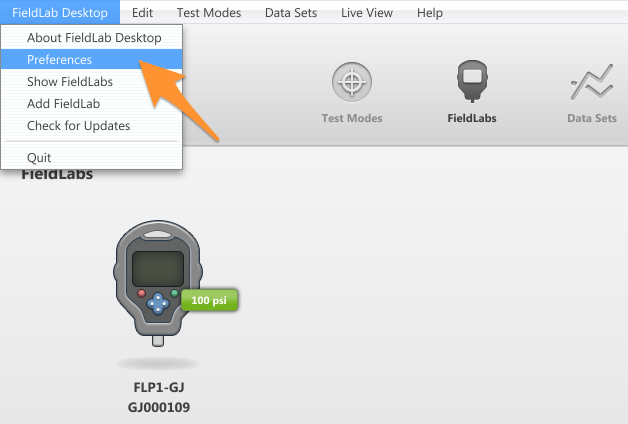


2. Select "Custom Units"


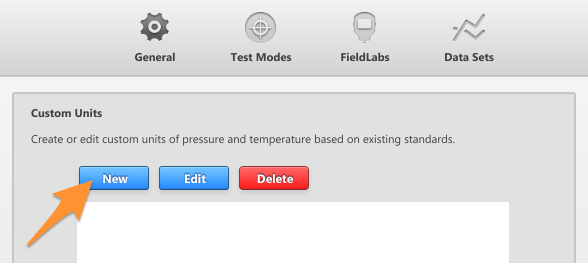
3. In the Custom Units dialog box, choose "New" for a new unit, "Edit" to edit and existing unit from the list.


4. Name your new unit, and select 'Linear Fit' or 'Curve Fit'.

Name your new unit. Then select Linear or Curve Fit.


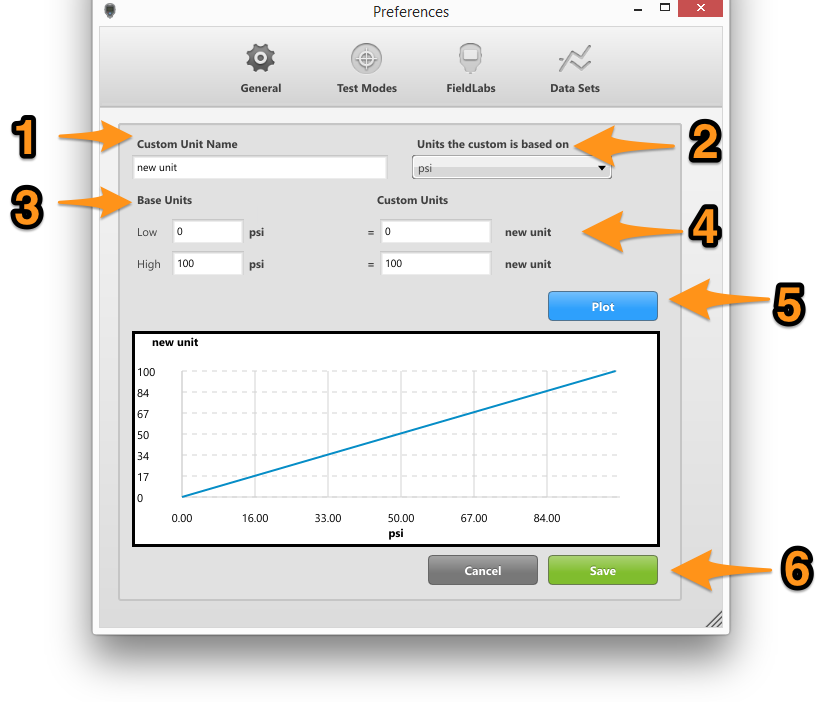
4. Edit the settings of your Custom Unit.


Info
1. Custom Unit Name: Enter the name of your Custom Unit here.
2. Units the custom is based on: Select a standard engineering unit you would like your Custom Unit to be relative to.
3. Base Units: Enter the low and high for the standard engineering unit your custom units will be based on.
4. Custom Units: Enter the Low and High for your Custom Units, relative to the Base Units.
5. Plot Button: Optional button that shows a visual representation of your Base Units and Relative Units.
6. Save: After completing your Custom Units, Save the data and you'll be returned to the Custom Units preferences window.


    • Related Articles

    • Create a Custom Pressure Unit with a User-Defined Curve Fit

      Things you will need: The FieldLab Desktop app on your Windows computer. Version 1.40.4 or later. Update FieldLab Desktop to the Latest Version. A Ralston FieldLab Digital Pressure Calibrator, Field Gauge, or Process Meter In the FieldLab Desktop ...
    • Create calibration tests for pressure gauges

      Create pressure gauge calibration tests using pre-configured templates for ASME and ISO Instrument Accuracy Classes, or customize a test to your own standards. The tests you create can be performed in the FieldLab Desktop App or on a FieldLab ...
    • Create a Snapshot Logging test

      Create a Snapshot Logging Test in FieldLab Desktop that you can sync & run on a Ralston FieldLab, or use a FieldLab or Field Gauge connected to your PC and log the data directly to FieldLab Desktop. Things you will need to create the test. A PC ...
    • Create a new Data Logging Test

      Create a test to run on a FieldLab Pressure Calibrator that logs data according to your customized settings including Units, Logging Interval, and Session Duration. You can also create custom power management settings that apply only when your custom ...
    • Update edits to custom pressure units on your FieldLab

      Applies to FieldLab Desktop versions 2.0 and later If you have edited and saved an existing custom pressure unit and it is already being used in a Test Mode installed on your FieldLab, you will need to delete and re-add the Test Mode on the FieldLab ...
    • Recent Articles

    • Set the logging interval for a test

      Applies to FieldLab Mobile versions 2.0 and later 1. Add the pressure and/or temperature readings you need to your test. Learn how to Add Readings to a Test. 2. Tap Test 3. Tap Interval 4. Select your desired interval 5. Select Back The interval you ...
    • Max logging durations based on interval: Quick reference table

      Applies to: All Bluetooth-enabled models of Field Gauge LC20, Process Meter LC30 Ralston Field Gauge and Process Meter gauges log data to on-board memory when you start logging from the Fieldlab Mobile app. The logging interval you select determines ...
    • Add Readings to a Test

      Applies to FieldLab Mobile versions 2.0 and later. This walkthrough demonstrates how to add one pressure reading. You can add as many readings to a test as needed by repeating the steps below. 1. Connect the included Bluetooth antenna(s) to the ...
    • Delete a Reading from the Test screen

      Applies to FieldLab Mobile versions 2.0 and later 1. Tap the Reading Card 2. Tap Reading 3. Tap Delete Reading 3a. Confirm that you wish to delete.
    • Getting Started: Run Your First Test with FieldLab Mobile

      This guide walks you through connecting a gauge, logging data, and retrieving a completed test run. This walkthrough uses a single gauge, but FieldLab Mobile supports multiple gauges and readings in a single test. The following guide applies to ...